
Inspiration and hope for the New Year at camp
October 13, 2026
By JORDAN POSNER
Voice Shore Correspondent
Hundreds of voices singing together. Campers laughing and dancing without hesitation. Jewish learning happens between activities, beneath trees and around campfires. For Rabbi Cantor Jacqueline Menaker of Shirat Hayam, nearly two weeks at Camp Harlam this summer as faculty offered something far more meaningful than a return to the familiar rhythms of Jewish sleepaway camp. It gave her a firsthand look at what happens when young people are given the freedom to experience Judaism not simply as something they are taught, but as something they can live, explore, and choose for themselves.
After four days at Camp Harlam, Menaker said she finally settled into the rhythm of camp, and with that came a powerful sense of déjà vu. The songs, laughter, friendships, late nights and unmistakable spirit of camp transported her back to her own childhood summers at Crane Lake Camp in the Berkshires in 1976.
Her return to camp was about much more than nostalgia. As she moved through the days at Camp Harlam, Menaker found herself reflecting on the unique role Jewish summer camps play in creating meaningful Jewish experiences for young people and on what those experiences can teach the broader Jewish community about the future.
“Whether movement-affiliated or independent, Jewish sleepaway camps share something profoundly powerful: They are places where Jewish life is not only taught, but lived,” she said. “Identity is formed through joy, friendship, learning, and shared purpose.” For Menaker, that experience ultimately became a source of hope.
As the Jewish community approached the Days of Awe, the 10 sacred days in the Jewish calendar beginning with Rosh Hashanah and ending with Yom Kippur, she returned home from camp with what she described as “a renewed sense of hope for the Jewish future.” It was not, she emphasized, an abstract or theoretical hope. It was something she had witnessed firsthand in the campers, counselors, educators and clergy around her.
One especially meaningful experience involved two young leaders from Israel, one Jewish and one Arab, representing Givat Haviva, a civil society organization for social change. Their friendship and willingness to engage in respectful dialogue offered Menaker a tangible example of what coexistence can look like.
“In a world often defined by division, their partnership reframed hope as something built through relationship, not rhetoric,” she explained. That sense of connection was also evident during camp song sessions, where hundreds of campers gathered to sing, dance and celebrate together.
“Hundreds of voices singing with complete abandon, arms around one another, dancing without self-consciousness,” Menaker recalled. “In those moments, joy itself became a form of faith, an embodied belief in a shared future.”
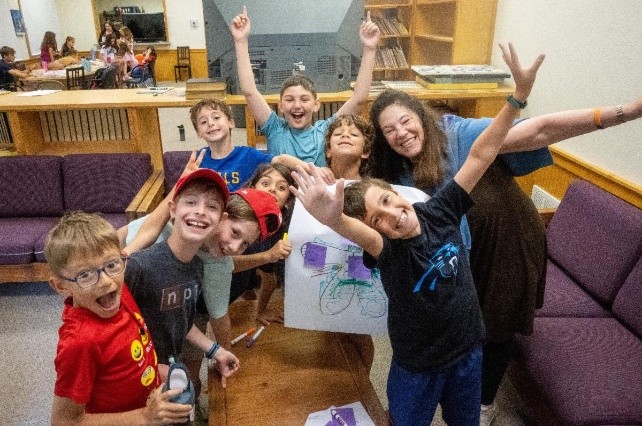
For Menaker, Jewish camp demonstrated that joy is not separate from Jewish life. It can be one of the ways Jewish identity is experienced most powerfully. That was particularly evident while working with the Rishonim boys, a group of second graders. Together, they imagined Jewish superheroes inspired by middot, or Jewish character traits. “The creativity, silliness, and laughter were not distractions from Jewish life; they were expressions of it,” Menaker said. “Here, hope was found in play, reminding us that imagination is a sacred resource.”
The experience also offered Menaker an opportunity to reconnect with colleagues. Around the faculty campfire, clergy and Jewish educators shared stories, laughter and encouragement. “Even those who guide others in Jewish life need spaces where they, too, are held by community,” she reflected.
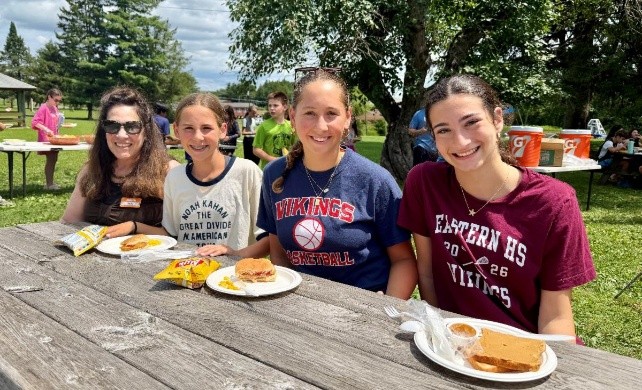
She also found it particularly moving to see several young people from the local community who attend Camp Harlam in what she described as “their natural habitat.” The teens welcomed Menaker into their world with openness and pride, and many campers expressed gratitude for her presence. “Their confidence, independence, and deep connection to Jewish life reflected a generation actively shaping its own Jewish future,” she said.
At Camp Harlam, Jewish learning was not confined to a classroom. It was woven into the fabric of daily life. Menaker encountered limmud (learning), conversations about Israel, discussions about college, middot (literally “measuring” in reference to one’s ethics), preparation for tefillah (prayer), tutoring, teamwork and thoughtful questions.
“What emerged was a seamless integration of learning and living,” Menaker added. “At camp, Jewish education is not preparation for life; it is life.” Even the physical setting of camp contributed to that experience. Prayer, hiking through the preserved lands of Monroe County, and quiet moments beneath towering trees reminded Menaker that sacred experiences do not have to happen inside a synagogue.
Another especially meaningful moment came on Tisha B’Av, when campers who chose to fast joined Menaker and an Israeli faculty member for learning throughout the day. For some of those campers, it was the first Jewish practice they had chosen independently since becoming a bar or bat mitzvah.
All of those experiences ultimately came together on Shabbat. The singing, dancing, prayer, friendships and ruach, the spirit and energy that permeated the camp–created what Menaker described as an experience that was difficult to put into words. “Shabbat at camp is not only a pause in time; It is a vision of the world as it could be; connected, joyful, and whole,” she said.
For Menaker, that may have been the greatest lesson of her summer. Hope was not found in one particular activity or one extraordinary moment. It emerged from the combination of experiences and relationships that make Jewish camp so powerful.
“I left the bubble of Camp Harlam inspired, grateful, and deeply optimistic,” she explained. She believes that clergy, lay leaders and congregations have an important role to play in encouraging young people to participate in these experiences and in bringing the lessons of informal Jewish education back into congregational life.
As the Jewish community enters a new year, Menaker believes those lessons extend far beyond the boundaries of Camp Harlam. “Jewish sleepaway camp has always done more than create summer memories,” Menaker said. “It cultivates Jewish identity, nurtures resilient leaders, and plants seeds of hope that continue to grow long after the summer ends.”