Moments of Inspiration and Hope
Rabbi Jacki Returns to Jewish Sleepaway Camp — and Why It Matters*
After nearly four days, I finally settled into the rhythm of Camp Harlam. Almost instantly, I was transported back to my earliest summer in the Berkshires at Crane Lake Camp in 1976. The songs, the laughter, the friendships, the late nights, the spirit all felt deeply familiar.
That sense of connection quickly deepened into something more meaningful. Whether movement-affiliated or independent, Jewish sleepaway camps share something profoundly powerful: they are places where Jewish life is not only taught but lived. Identity is formed through joy, friendship, learning, and shared purpose. And in that living, something essential is cultivated; hope.
As we approach the month of Elul leading to the Days of Awe, I returned home carrying a renewed sense of hope for the Jewish future. Not an abstract hope, but one rooted in lived experience. Here are ten moments that, together, formed a narrative of that hope and reminded me why Jewish camp remains one of the most powerful incubators of Jewish life. As clergy, lay leadership, and congregational community we are duty bound to encourage attendance, to provide these opportunities and to utilize the skills learned within the informal Jewish educational environment.
1. Hope Through Encounter
One of the most moving experiences was meeting two remarkable young leaders from Israel representing Givat Haviva—one Jewish and one Arab. Together they modeled respectful dialogue, friendship, and the possibility of coexistence. In a world often defined by division, their partnership reframed hope as something built through relationship, not rhetoric.
2. Joy That Cannot Be Contained
That same spirit of connection came alive in the most exuberant way during camp song sessions. Hundreds of voices singing with complete abandon, arms around one another, dancing without self-consciousness. In those moments, joy itself became a form of faith—an embodied belief in a shared future.
3. Laughter as a Sacred Practice
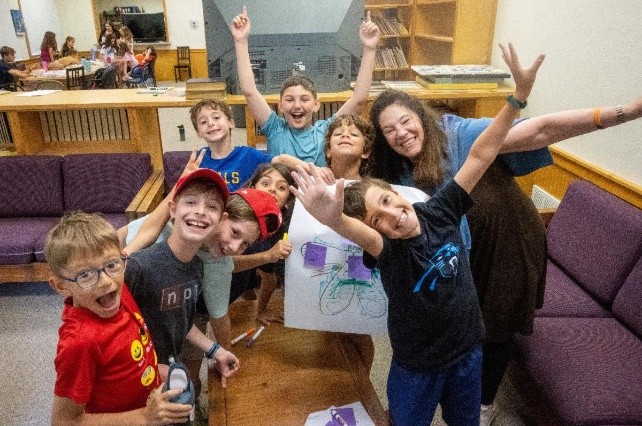
With the Rishonim boys (2nd grade), we imagined Jewish superheroes inspired by middot—our Jewish character traits. The creativity, silliness, and laughter were not distractions from Jewish life; they were expressions of it. Here, hope was found in play, reminding us that
4. Community Among Colleagues
As the day turned to evening, another layer of hope emerged around the faculty campfire. Sharing stories, laughter, and support with fellow clergy and educators created a sense of deep professional and personal community. Even those who guide others in Jewish life need spaces where they, too, are held by community.
5. Seeing Our Teens Thrive
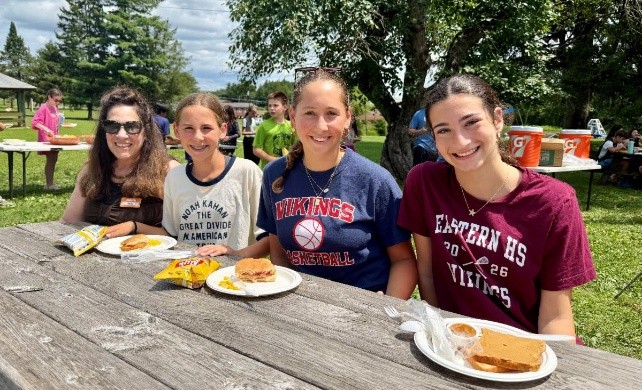
That sense of being held extended to the campers themselves. Watching Jules and Layla Koch in their natural habitat was profoundly moving. They welcomed me into their world with openness and pride, and many expressed gratitude for my presence. Their confidence, independence, and deep connection to Jewish life reflected a generation actively shaping its own Jewish future.
6. Jewish Learning That Comes Alive
Throughout camp, Jewish learning was everywhere—limmud, conversations about Israel, reflections on university life, middot, tefillah preparation, tutoring, teamwork, and thoughtful questions. What emerged was a seamless integration of learning and living. At camp, Jewish education is not preparation for life; it is life.
7. Discovering Sacred Space
That lived Judaism extended into the landscape itself. Whether in prayer, hiking through the preserved lands of Monroe County, or sitting quietly beneath towering trees, I was reminded that holiness is not confined to buildings. It is encountered in openness, in nature, and in shared presence. Hope, too, can be found in these expansive spaces.
8. Everyone Gets a Turn
That expansiveness also showed up in celebration. During MTV Night, each bunk performed its own dance routine. Many campers had never even watched MTV but that didn’t matter. What mattered was that every group had a moment to shine. In a world that often feels competitive and exclusive, camp offers a radically hopeful alternative: everyone belongs, and everyone participates.
9. Choosing Judaism for Themselves
One of the most powerful expressions of that belonging came on Tisha B’Av. Campers who chose to fast joined an Israeli faculty member and me for learning throughout the day. For many, this was the first Jewish practice they had chosen independently since becoming Bar or Bat Mitzvah. In that choice, Judaism shifted from obligation to ownership and hope became something they actively claimed.
10. Shabbat at Camp
All of these threads came together on Shabbat. The singing, dancing, prayer, friendships, and palpable ruach created an experience that defies easy description. Shabbat at camp is not only a pause in time; it is a vision of the world as it could be; connected, joyful, and whole.
As I moved through these moments, a clear narrative emerged: hope at camp is not found in any single experience, but in the way all of them weave together. It is built through encounter, joy, learning, community, sacred space, inclusion, choice, and rest. It is lived into being, moment by moment.
As we begin the month of Elul and prepare for Rosh Hashanah, we are invited to discover what parts of our lives need to be improved and how we can better make a difference in the world. We lean into the places we find hope in the future.This experience reminded me that hope is not simply something we wish for, it is something we build. We build it through community, learning, joyful Judaism, courageous conversations, and through meaningful choices that resonate with our youth.
No matter whether the Jewish camp is Movement aligned or independent, Jewish sleepaway camp has always done more than create summer memories. It cultivates Jewish identity, nurtures resilient leaders, and plants seeds of hope that continue to grow long after the summer ends. How many Jewish communal and religious leaders do you know who site Jewish summer camp as a formative experience? I know many!
I left the bubble of Camp Harlam inspired, grateful, and deeply optimistic. As we enter a new Jewish year together, may we all find or create places that renew our spirits, strengthen our Jewish commitments, and remind us that hope is not only possible—it is already being lived.
Shabbat Shalom!
Rabbi Jacki